
🌍🤝 “Most leaders think sustainable performance is built on discipline and drive… but the real foundation might be something far more human.” 🤝🌍
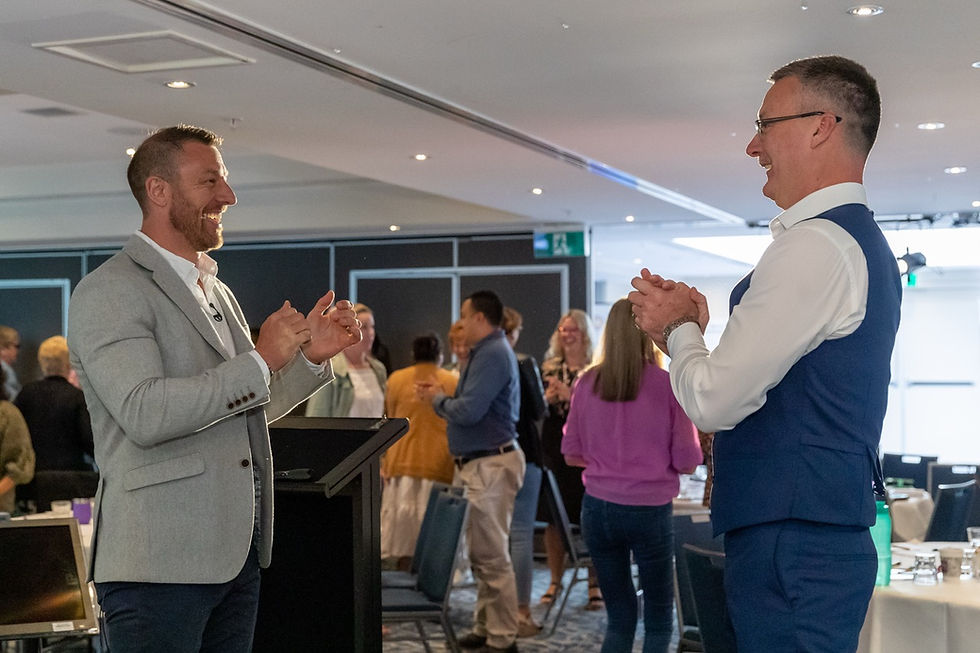
In boardrooms around the world, I see the same pattern.
Leaders optimise schedules.
Track metrics.
Push productivity.
Yet one of the most powerful performance levers is often overlooked… human connection.
🧠 The Science
A growing body of peer-reviewed research shows that strong social connection is not just emotionally valuable… it is biologically protective.
A landmark meta-analysis published in PLOS Medicine found that people with stronger social relationships had a 50% greater likelihood of survival compared with those with weaker connections (Holt-Lunstad et al., 2010 - https://pubmed.ncbi.nlm.nih.gov/20668659/).
Other work in Psychoneuroendocrinology and related fields suggests social support can buffer the physiological stress response, reducing cortisol activity and improving resilience under pressure (Ozbay et al., 2007- https://pubmed.ncbi.nlm.nih.gov/20806028/).
In other words… connection literally helps regulate the body’s stress systems, and when stress physiology is regulated, leaders tend to think more clearly, recover more effectively, and sustain performance for longer.
💡 What This Means for Real Leaders
In high-pressure environments, connection is often the first thing sacrificed.
Calendars fill up.
Conversations become transactional.
Interactions shrink to “quick updates”.
Yet the evidence suggests the opposite strategy may be wiser.
Small relational habits compound over time:
🤝 A genuine check-in before the meeting begins
☕ A walking meeting with a colleague instead of another Zoom
📞 A call instead of a message when something matters
👂 Listening fully for five uninterrupted minutes
These moments seem small…but biologically and psychologically they help create the conditions where people can think, recover, and perform better together.
Sustainable performance has never been purely individual, even the world’s best athletes rely on coaches, teammates, and support systems to sustain excellence.
Leadership is no different. If we want people to perform at their best for the long run… we have to build environments where connection is normal, not optional.


